
Lay down. Breathe.
Let your thoughts wander.
Artist Statement
About a year ago, I got the call. My older brother was unconscious, bleeding from his brain, and I needed to find my own way down to Georgia to see him. For the next month, I spent every day alone with him in the hospital, sitting in silence for hours. Not knowing when or if he was going to wake up. When or if he was going to be okay. When or if he would be the same. This period of my life was filled with uncertainty and a complete loss of control.
During this time, I found peace by hiking throughout Georgia in solitude. Observing the fractalized patterns found in nature gave me a sense of familiarity as I remembered the childhood trails my brother and I once explored together. I thought about other loved ones I had hiked with, the intimate conversations we shared, and the support system I had unknowingly built through these experiences in nature.
Later in the year, as my brother began to recover physically, I realized that I was still processing the trauma of what had happened. Winter had arrived, and with it came the resurfacing of darker childhood memories— memories of my family abandoning me throughout my life, especially during holidays. Memories of my brothers beating me as a teenager. Memories of the fear of abandonment that shaped my childhood slowly crept back into my life. These fears began to consume me, leaving me feeling lost and confused. During this period of intense emotion, I found myself craving that same sense of familiarity and support once again.
Because of how still and lifeless Indiana feels during the winter, I began exploring vast worlds of 3D fractals. I became drawn to a particular fractal form that reminded me of a field of flowers, offering a sense of comfort and a space to explore my emotions. Using artificial intelligence and a single photograph of flowers, I generated a landscape of a never-ending, blooming field. This process resulted in a meditative video work that brought me the same sense of familiarity and support I had been longing for, and helped me begin processing my trauma.
Smell the Roses is a meditative video art piece that invites participants to take a break from the demands of everyday life— to lay down, breathe, and explore their own thoughts and feelings. The work also engages with current conversations surrounding the ethics of artificial intelligence, proposing a quiet, contemplative way of integrating the technology into an artistic practice.
Technical Approach
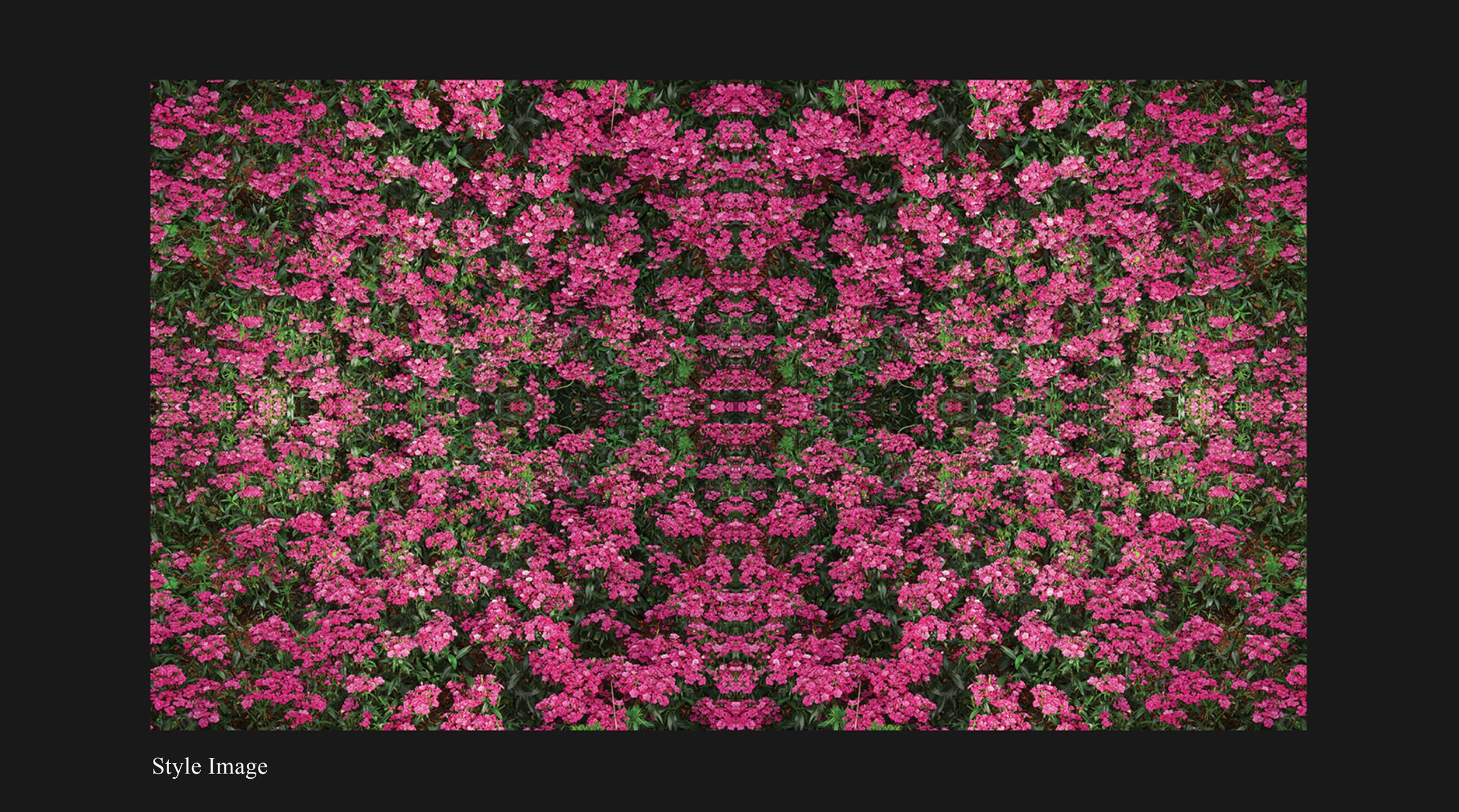
Phase One: Style Image
Smell the Roses begins with a singular floral study. While the project evolved through hundreds of iterations and prototypes over a two-year period, this specific image represents the final "style" anchor. I meticulously edited this foundation to amplify color saturation and force a recursive repetition of petals, establishing the aesthetic DNA for the entire sequence.
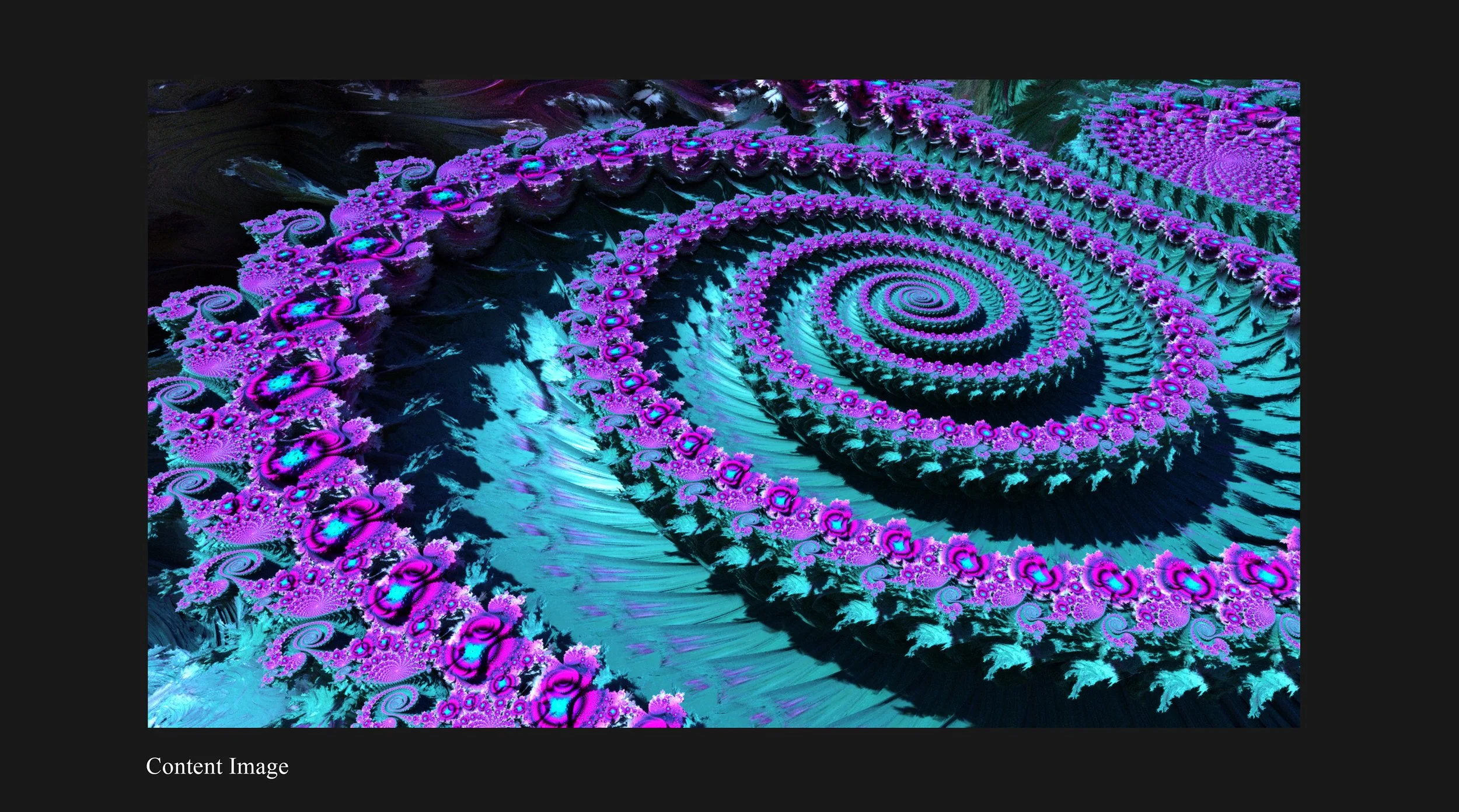
Phase Two: Content Image
To generate the content sequence, I utilized Mandelbulber to architect a 3D fractal environment. This phase was deeply iterative; early low-resolution renders served as sketches to map out complex camera trajectories. As neural style transfer capabilities advanced over the two-year span, I scaled the production in tandem. The final sequence is rendered in 4K, capturing a level of structural detail that allows the viewer to fully submerge in the fractal geometry.
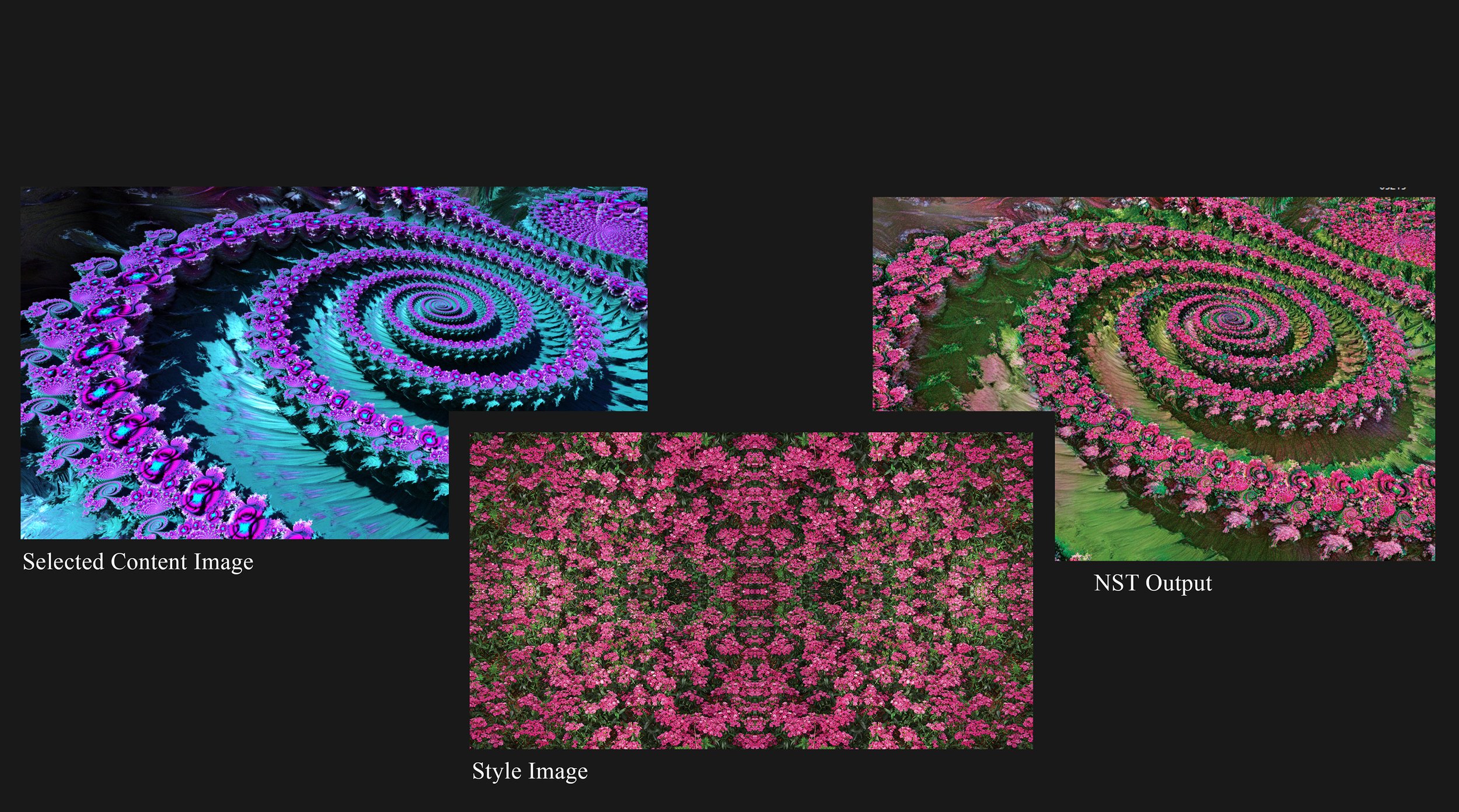
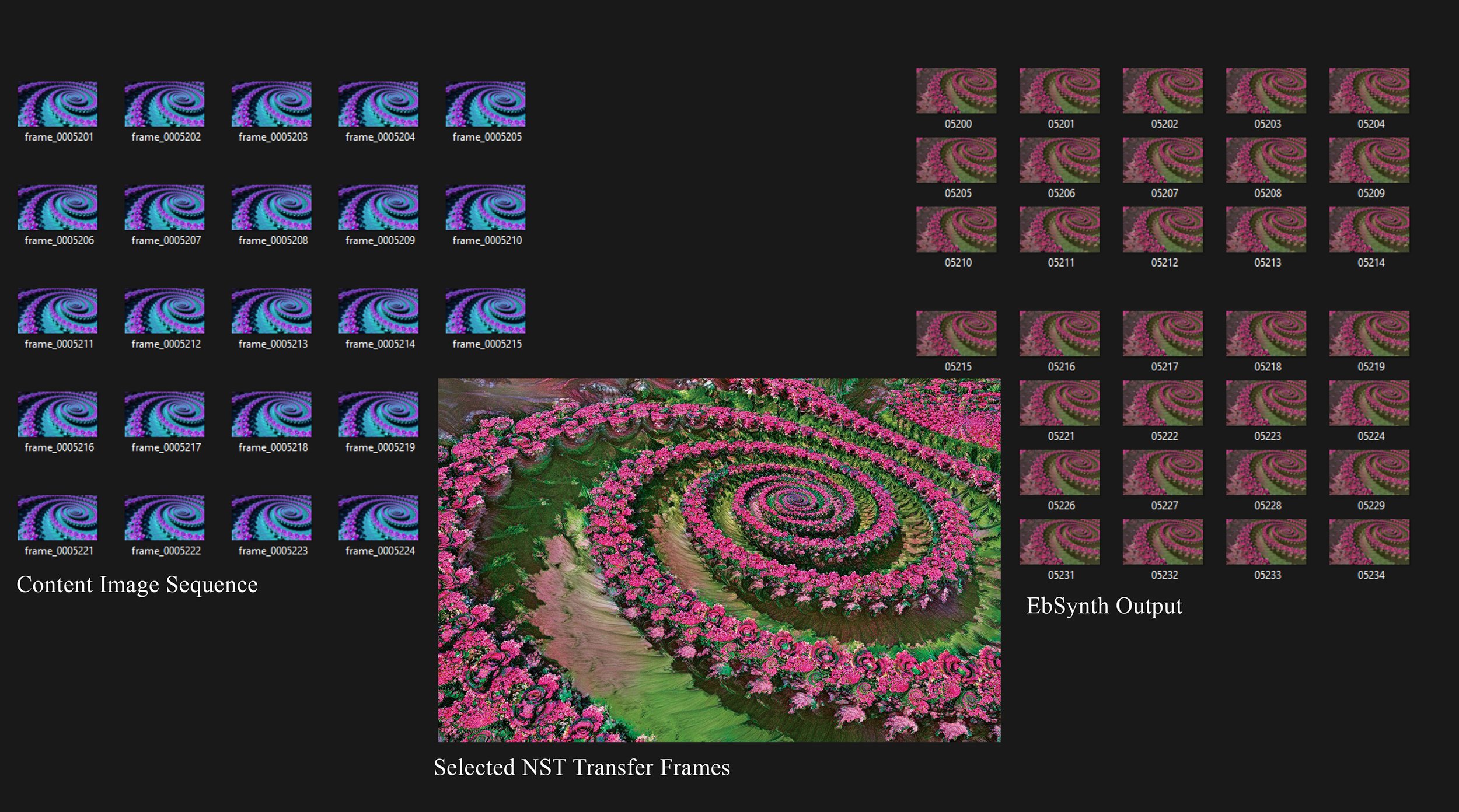
Phase Three: Neural Style Transfers
I utilized Neural Style Transfer (NST) not as a generative shortcut, but as a method for iterative reprocessing. In this workflow, AI is not the creator of the composition; it is a transformation tool acting upon a closed system of artist-authored materials.
Project Pipeline:
Early Prototyping (2021): Initial aesthetic exploration using Google Deep Dream to establish visual motifs.
Neural Style Transfer (2022–2023): Implementing ProGamerGov’s architecture to synthesize the high-resolution "Style Image" with the complex "Content" fractal renders.
Temporal Coherence (2022–2023): Utilizing EbSynth to propagate the neural style across the full animation sequence, ensuring fluid motion and stylistic consistency.
Final Assembly: Post-production and color grading within Adobe Premiere Pro.
Project History & Acknowledgements
The technical workflow was developed independently by Suzanne Schneider (2021–2023). The artist wishes to acknowledge the foundational mentorship of Esteban Garcia (Purdue University) and the late Margaret Dolinsky (Indiana University).
A special thanks to Alexander Landerman (Graphic Design, Indiana University) for his constant encouragement of my most ambitious ideas in any medium, and to David Ondrik (Photography, Indiana University) for teaching me the discipline of alternative processes and the power of creating therapeutic work through the photography lens.
I am deeply grateful to Jerrod Kell (Computer Scientist) for teaching me Python early on and assisting with the technical troubleshooting that made this code-driven workflow possible.
Lastly, I want to thank my Grandpa, my #1 supporter since birth. By providing me a stable and secure home life early in life, it allowed me the peace and focus to become the artist I am today! During the emotional hardships of this project, I often went back home for his support <3


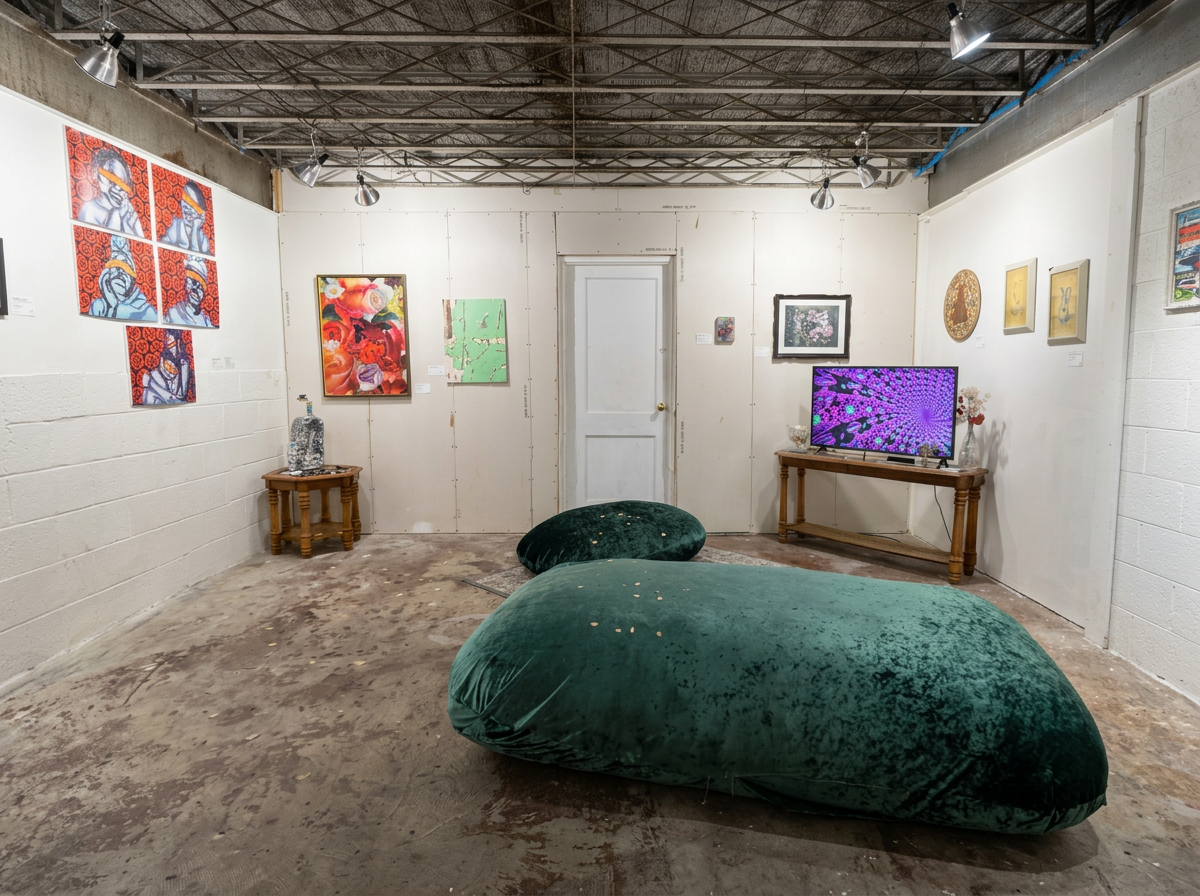
Exhibition Shows
Algorithmic Narratives Symposium on Electronic Arts → Villa Genoese, Italy, 2026
AI for Good’s Canvas of the Future → Lake Geneva, Switzerland, 2026
Artificial Imagination Screening at PROMPT → Castle of Brescia, Italy, 2026
Big Art Show 2023 → Paisley, United Kingdom, 2023
a rose is a rose is a rose → Bloomington, Indiana 2023
ART meets SCIENCE → Baltimore, Maryland 2023
AI: The Next Evolution → Chimaera Gallery 2023
When All Dreams Come True → Toronto, Canada 2023
B.F.A Thesis Exhibition Show → Indiana University, 2023
For exhibition bookings, artist talk opportunities, or screening inquiries regarding Smell the Roses, contact the studio at swedes.experience@gmail.com